
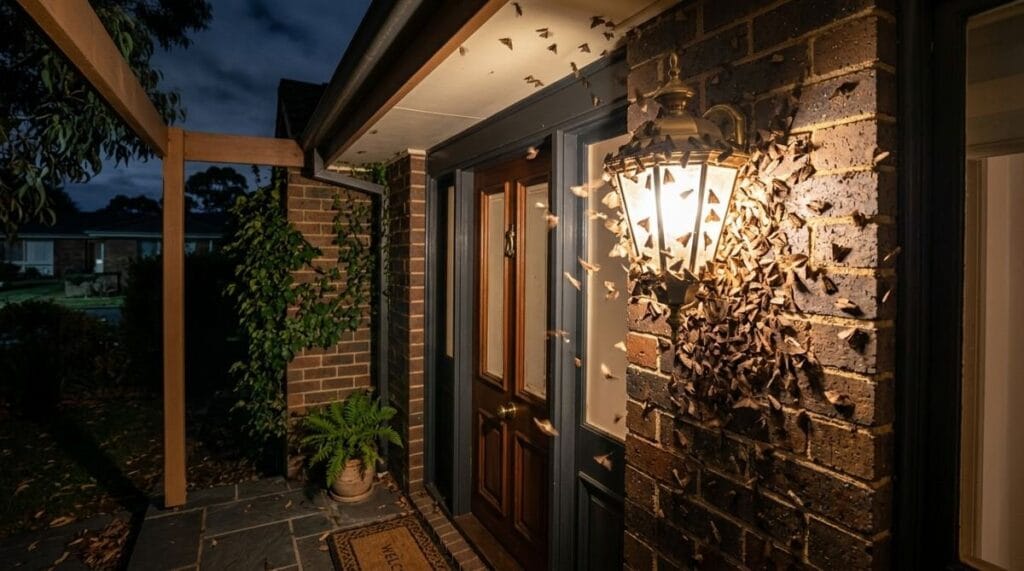
There are so many moths in Sydney right now because millions of bogong moths are migrating south through New South Wales during spring (September to November), and warm nights combined with bright lights pull them straight into our homes. The good news is that most of these moths are harmless bogong moths simply passing through. Only a few household species, mainly pantry, clothes and carpet moths, actually cause damage.
Here is what is driving the surge, which moths are worth worrying about, and how to get them out of your home.
Why Are There So Many Moths in Sydney Right Now?
Every spring, huge numbers of bogong moths travel south and east across New South Wales on their way to the Australian Alps. As they move, they rest during the day and fly at night, and any bright light along the route (porch lights, windows, service stations and office towers) acts like a beacon. When the weather warms up quickly, as it often does in a Sydney spring, the numbers can spike almost overnight into what many locals call a “moth plague”.
According to the Australian Museum, bogong moths can travel more than 1,000 kilometres on this annual journey, navigating at night using the stars and the earth’s magnetic field. Sydney sits right in the flight path, so for a few weeks the moths are impossible to ignore.
What Are Bogong Moths and Where Do They Come From?
The bogong moth (Agrotis infusa) is a medium sized, dark brown moth with a wingspan of around 5 centimetres. It breeds over winter on the inland plains of Queensland, New South Wales and Victoria, then migrates to cool caves high in the Australian Alps to shelter through the hot summer, before returning inland in autumn to breed again.
Bogong moths do not bite, they do not eat your clothes or food, and they do not breed inside your house. They are a nuisance rather than a threat. They are also an important part of the ecosystem: they are a key food source for the endangered mountain pygmy possum, and their numbers fell so sharply a few years ago that the species is now listed as endangered. A strong migration year is actually a good sign, even if it means more moths on your ceiling.
Are the Moths in My House Dangerous?
Bogong moths are not dangerous. They do not sting or carry disease, and they will move on within a few weeks. The main downsides are the mess (wing scales, droppings and the occasional stain on walls or curtains) and the smell if large numbers die inside wall cavities or light fittings. People with asthma or dust allergies may find heavy numbers irritating, so it is worth clearing them out promptly.
The moths worth paying closer attention to are the household species that quietly feed on your food and fabrics.
Which moths actually damage your home?
| Moth type | Common in Sydney? | Harmful? | What it targets |
|---|---|---|---|
| Bogong moth | Very (spring migration) | No, nuisance only | Nothing indoors; drawn to light |
| Pantry moth (Indian meal moth) | Yes | Yes | Stored food: grains, cereals, flour, rice |
| Clothes moth | Yes | Yes | Wool, silk and other natural fibres |
| Carpet moth | Yes | Yes | Carpets, rugs and upholstery |
| Case moth | Yes (gardens) | Minor | Foliage; hangs in little cases on walls and eaves |
What Attracts Moths Into Your Home?
Knowing what attracts moths is the first step to keeping them out. The main draws are:
- Bright outdoor and indoor lights at night, especially cool white globes.
- Open or poorly screened windows and doors.
- Exposed dry food in the pantry, such as flour, cereal, rice and pet food.
- Natural fibre clothing, rugs, blankets and stored textiles.
- Warm, humid spring weather that speeds up breeding.
How Do You Get Rid of Moths in Your House?
The right approach depends on the type of moth you are dealing with.
For bogong and other flying moths drawn in by light:
- Turn off unnecessary outdoor lights and close curtains after dark.
- Switch porch and entry lights to warm yellow or “bug” LED globes, which attract far fewer moths.
- Repair torn flyscreens and seal gaps around doors and windows.
- Vacuum up any that get inside; they will not breed indoors and will soon move on.
For pantry moths in the kitchen:
- Throw out any infested or open dry food and check for webbing or tiny larvae.
- Store flour, grains and cereals in airtight containers.
- Wipe down shelves, cracks and corners, then set pantry moth traps to catch the adults.
For clothes and carpet moths, which are sometimes confused with carpet beetles:
- Wash or dry clean affected clothing, rugs and blankets.
- Vacuum carpets, skirting boards and wardrobes thoroughly, including the edges.
- Store woollens sealed with cedar or lavender, and use pheromone moth traps.
Do moth balls actually work?
Traditional moth balls can repel clothes moths inside a sealed wardrobe or storage box, but only in an enclosed space where the vapour builds up. They are strong smelling and toxic if handled or inhaled in the open, so they are not suitable for living areas, and they do nothing at all for bogong moths flying around your lights. Safer alternatives include airtight storage, cedar blocks, lavender sachets and pheromone traps.
How Can You Keep Moths Out This Spring?
- Switch to warm coloured, low attraction outdoor lighting.
- Fit and repair flyscreens on windows and doors.
- Keep dry food in sealed containers and clean up spills quickly.
- Store off season clothing and blankets clean, dry and sealed.
- Vacuum carpets, wardrobes and quiet corners regularly.
For a complete seasonal plan across every common pest, see our guide to spring pest control.
When Should You Call a Pest Control Professional?
Call a professional when pantry, clothes or carpet moths keep coming back, when you find larvae or fabric damage, or when you cannot track down the source. These infestations breed indoors and rarely clear on their own. Our residential pest control team can treat the problem at the source and help prevent it returning, and a professional pest inspection will find any hidden breeding sites, along with other spring pests such as silverfish. Bogong moths, on the other hand, are seasonal and clear on their own, so they rarely need chemical treatment, and we will always tell you honestly when treatment is not needed.
Frequently Asked Questions
Are bogong moths dangerous?
No. Bogong moths do not bite, sting or carry disease, and they do not damage food or fabrics. They are a seasonal nuisance that clears within a few weeks, though large numbers can bother people with asthma or dust allergies.
How long does moth season last in Sydney?
The main bogong moth migration runs through spring, roughly September to November, with the heaviest numbers usually appearing on warm nights early in the season. Household moths like pantry and clothes moths can be active all year if there is food or fabric to feed on.
Do moth balls actually work?
Moth balls only work against clothes moths inside a sealed, enclosed space where the vapour can build up. They are toxic and strong smelling in open rooms, and they have no effect on bogong moths. Airtight storage, cedar, lavender and pheromone traps are safer options.
Why are moths attracted to light?
Moths navigate at night using natural light such as the moon and stars. Artificial lights confuse this system and draw them in, which is why porch lights, windows and street lights collect so many moths during the spring migration.
How do I get rid of pantry moths?
Throw out infested dry food, move the rest into airtight containers, wipe down the shelves and cracks, and set pantry moth traps to catch the adults. If the moths keep returning after cleaning, a pest control professional can locate and treat the source.