

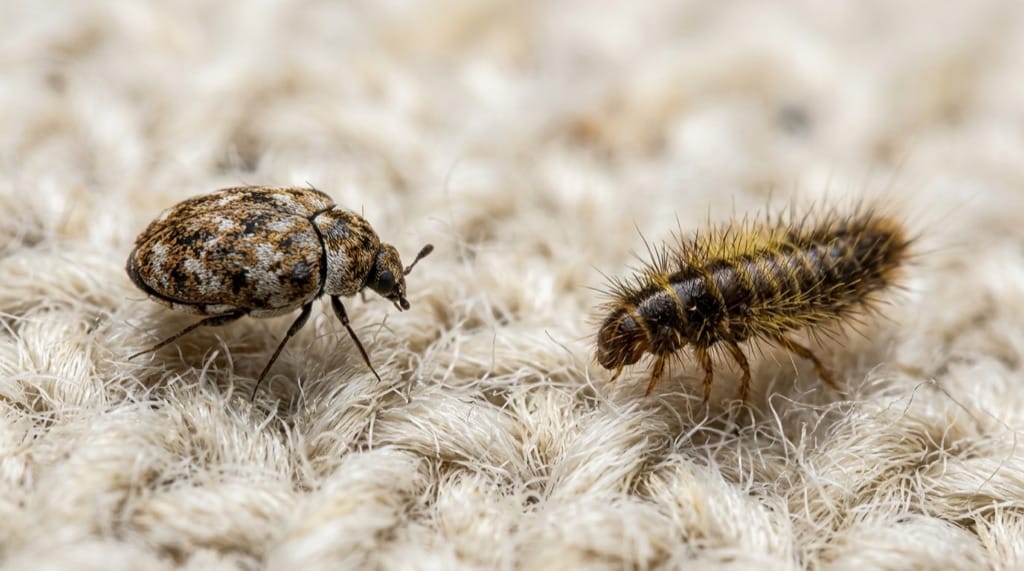
Carpet beetles are caused by easy access to the things they feed and breed on — natural fibres such as wool and silk, flower pollen, and hidden debris like lint, pet hair and food crumbs. The adult beetles fly in from the garden, or hitchhike inside on cut flowers and second-hand furniture, then lay eggs in dark, undisturbed spots where their larvae can feed for months. If you keep spotting small beetles or unexplained holes in fabric, our residential pest control team can trace and treat the source. Here is exactly what draws them in and how they get inside.
What Causes Carpet Beetles in the Home?
Carpet beetles appear when a home offers both a food source and an undisturbed place to breed. The root causes are:
- Natural fibres — wool carpet, rugs, blankets, felt and silk give the larvae their preferred food.
- Pollen and plant matter — adults feed on pollen, so gardens and cut flowers draw them close to the house.
- Dust and debris — lint, shed hair, dead insects and food debris in skirting boards and under furniture feed larvae where fibres are scarce.
- Undisturbed hiding spots — wardrobes, storage boxes and roof voids let a small population grow unnoticed.
How Do Carpet Beetles Get Into Your Home?
Understanding how do carpet beetles get in the house is the key to keeping them out. Adults are strong fliers and hitchhikers, and they usually arrive by one of these four routes:
- Cut flowers and pot plants carried inside
- Second-hand furniture, rugs and clothing
- Open windows, vents and gaps around doors
- Bird and insect nests in the roof and eaves
Cut flowers and plants
Because adults feed on pollen, freshly cut flowers are one of the most common ways they get indoors. A single beetle tucked in a bouquet can lay dozens of eggs once inside.
Second-hand furniture and clothing
Pre-loved lounges, wool rugs, vintage coats and blankets can already carry carpet beetle eggs or carpet beetle larvae. Always inspect and, where possible, wash or heat-treat second-hand items before bringing them in.
Open windows, vents and gaps
The varied carpet beetle and black carpet beetle both fly toward light and will drift in through unscreened windows, weep holes and vents. Small gaps around doors and pipes are enough.
Bird and insect nests in the roof
Abandoned bird nests, possum debris and dead insects in the roof void are a hidden buffet. Larvae feeding there can spread down into ceilings and wardrobes, which is why infestations often start upstairs.
What Attracts Carpet Beetles Once They’re Inside?
Once indoors, carpet beetles are drawn to keratin — the protein in animal-based fibres. The biggest attractants are wool and silk textiles, but they will also feed on lint, pet hair, dead insects and food debris. Synthetic carpet is usually safe unless it is soiled with sweat, spills or hair, which is why cleaning matters as much as the fabric itself.
Carpet Beetle vs Clothes Moth vs Bed Bug
Carpet beetles are often confused with two other household pests. Here is how to tell them apart:
| Pest | What it damages | Where it’s found | Treatment |
|---|---|---|---|
| Carpet beetle | Wool, silk, rugs, stored clothing (larvae feed, not adults) | Carpets, wardrobes, roof voids, under furniture | Vacuuming, laundering, surface and void treatment |
| Clothes moth | Wool and silk garments; leaves silk webbing | Dark, undisturbed wardrobes and drawers | Laundering, pheromone traps, targeted spray |
| Bed bug | Bites people (does not damage fabric) | Mattress seams, bed frames, bedroom cracks | Heat treatment and specialist insecticide |
Signs You Have a Carpet Beetle Infestation
The clearest signs of carpet beetles come from the larvae rather than the adults. Watch for:
- Small, hairy, carrot-shaped carpet beetle larvae along skirting boards and carpet edges
- Shed larval skins and tiny fibrous faecal pellets
- Irregular bare patches or holes in wool rugs, clothing and upholstery
- Adult beetles (2–4 mm, mottled or solid black) near windows
For a full identification guide, see our earlier post on how to spot and get rid of a carpet beetle infestation.
Where Carpet Beetles Lay Eggs and Hide
Females lay carpet beetle eggs close to a food source, then the larvae do the damage over several months. Common egg and hiding sites include the edges of wool carpet, the underside of rugs and lounges, inside stored winter clothing, air vents, and the lint that collects behind wardrobes and appliances. Because they avoid light and movement, a carpet beetle infestation can build quietly in rooms you rarely disturb.
How to Stop Carpet Beetles Getting In
Prevention targets both entry and food supply:
- Vacuum carpet edges, under furniture and inside wardrobes regularly, and empty the vacuum outside.
- Fit and repair fly screens; seal gaps around windows, vents and weep holes.
- Check cut flowers and shake them outdoors before bringing them in.
- Inspect and clean second-hand furniture and clothing before use.
- Store wool and silk items clean, in sealed containers.
- Clear old bird nests and debris from the roof and gutters.
What Causes Carpet Beetles to Keep Coming Back?
If they return after cleaning, it usually means a breeding site was missed — most often a roof void, an under-floor space, or a rarely-moved piece of furniture. This is where a professional pest inspection earns its keep, locating the source rather than just treating the visible beetles. Carpet beetles also share hiding spots with other fabric pests such as silverfish, so it pays to check for both.
When to Call a Professional for Carpet Beetle Control
Call a professional when damage keeps appearing, when you find larvae in more than one room, or when the source seems to be in the roof or sub-floor. Our team identifies the species, finds the breeding site and treats it safely around children and pets. Learn more about our residential pest control services across Sydney.
Frequently Asked Questions
What causes carpet beetles?
Carpet beetles are caused by access to natural fibres (wool, silk), pollen and household debris such as lint, hair and food crumbs. Adults enter from the garden and lay eggs where larvae can feed undisturbed.
How do carpet beetles get in the house?
They arrive on cut flowers and pot plants, in second-hand furniture and clothing, through open windows and vents, or from old bird and insect nests in the roof.
Do carpet beetles go away on their own?
Rarely. Larvae keep feeding on fibres for months and females lay more eggs, so an untreated infestation tends to spread. Cleaning helps, but locating and treating the breeding site is what stops them.
Sources: Australian Museum — Insects; CSIRO.