

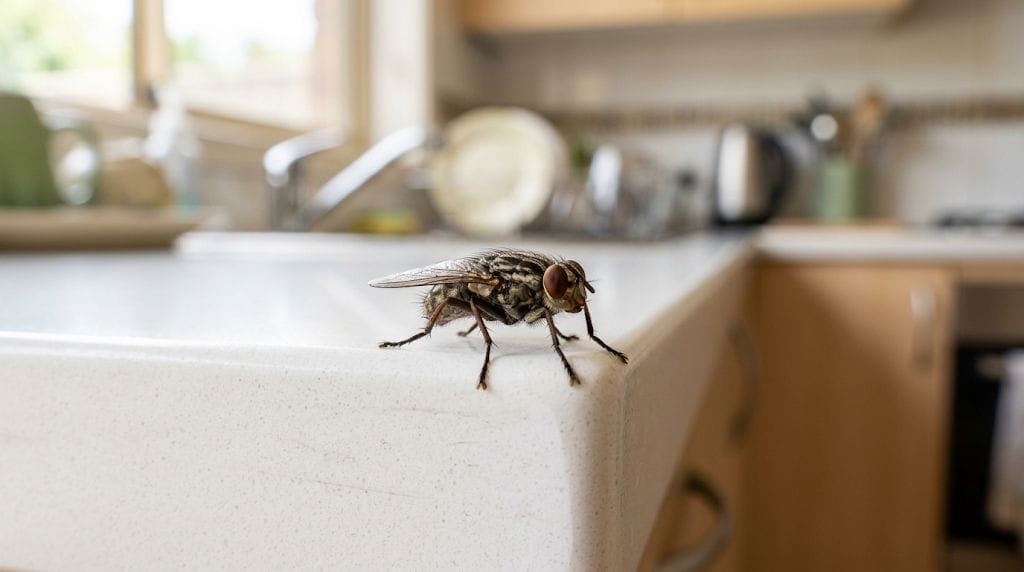
To get rid of flies, remove what attracts them and then kill the ones already inside. Clear food scraps, covered bins, pet waste and standing water, seal gaps around doors and windows with screens, and knock down adult flies with fly traps, baits or a residual surface spray. For a heavy or recurring infestation, a professional treatment targets the breeding source so the flies do not simply come back.
Flies are more than an annoyance. House flies and bush flies move between rubbish, animal waste and your food, and can carry bacteria that cause stomach upsets. This guide explains why flies appear, how to get rid of them quickly, and how to keep them out of your home for good across Sydney and New South Wales.
Why do I suddenly have so many flies in my house?
Flies appear in large numbers when there is a food source and a breeding site close by. A single female house fly can lay hundreds of eggs, and in warm Australian weather those eggs become adult flies in about a week. Common triggers include:
- Uncovered food, fruit bowls, dirty dishes or spilt drinks
- Kitchen bins and outdoor rubbish that are not sealed or emptied often
- Pet food left out, and dog or cat waste in the yard
- Compost, lawn clippings and rotting fruit under trees
- Drains, damp areas and standing water in pot plant trays or gutters
- Warm spring and summer temperatures that speed up breeding
If flies keep coming back after you clean up, there is almost always a breeding source nearby that needs to be found and removed.
How do you get rid of flies for good?
Getting rid of flies works best as two steps: take away what draws them in, then remove the ones already inside. Work through this checklist:
- Remove the food source. Store food in sealed containers, wipe benches, wash dishes promptly and keep fruit in the fridge during fly season.
- Manage waste. Use bins with tight lids, line them, empty them regularly and rinse them out. Pick up pet waste daily.
- Dry out breeding sites. Clear blocked drains, tip out standing water and keep compost covered and away from the house.
- Block entry points. Fit fly screens to doors and windows and seal gaps where flies get in.
- Knock down the adults. Use fly traps, sticky ribbons, baits or a residual surface spray on the areas where flies land and rest.
- Treat the source. If flies return within days, book a professional inspection to locate and treat the breeding point.
Which flies are in Australian homes?
Not every fly is treated the same way, because each one breeds in a different place. This table shows the flies you are most likely to see around a Sydney home and what to do about each.
| Fly | Where you see it | Breeds in | Quick fix |
|---|---|---|---|
| House fly | Kitchens, bins, around food | Rubbish, food waste, manure | Seal bins, remove food, trap adults |
| Bush fly | Outdoors, faces and backs | Animal dung, moist soil | Pick up pet waste, screen doors |
| Blowfly (blue/green) | Near meat, dead animals, bins | Carcasses, meat scraps, pet waste | Remove the source, clean bins |
| Fruit fly (small, around produce) | Fruit bowls, bins, recycling | Over-ripe fruit, fermenting liquid | Fridge fruit, apple-cider vinegar trap |
| Drain fly (tiny, moth-like) | Bathrooms, laundries, sinks | Gunk inside slow or unused drains | Clean and flush the drain |
What are the best natural ways to repel flies?
If you prefer to start without chemicals, several low-cost methods help reduce flies:
- Apple-cider vinegar trap. Half-fill a jar with apple-cider vinegar, add a drop of dish soap and cover with cling film punched with small holes. This works well for fruit flies.
- Herbs and essential oils. Flies dislike basil, mint, lavender and eucalyptus. A few pots on the windowsill or a diluted spray near doorways can deter them.
- Fly screens and door strips. The simplest long-term fix is to stop flies getting in at all.
- Keep it dry and clean. Flies need moisture and organic matter to breed, so a dry, tidy kitchen is your best natural defence.
Natural methods manage small numbers well, but they do not reach the breeding source, so they work best alongside good hygiene and screening.
How do you keep flies away long term?
Prevention is cheaper and easier than dealing with a swarm. To keep flies away through the warmer months:
- Empty and clean bins regularly, and keep the lids closed
- Clean up pet waste and don’t leave pet food out
- Store and dispose of food scraps promptly, especially fruit
- Fix leaks, clear drains and remove standing water
- Keep compost covered and positioned away from doors and windows
- Maintain fly screens and seal gaps around the house
Spring is the time to get ahead of fly season, before the population builds. Our guide to preparing your home for spring pest season covers the yard and entry-point checks that also keep flies out, and because flies and mosquitoes share many of the same moisture and waste triggers, fixing one often reduces the other.
Are flies in the house dangerous?
Flies are a genuine hygiene risk, not just a nuisance. According to Victoria’s Better Health Channel, house flies can carry organisms that cause illnesses such as gastroenteritis, dysentery and food poisoning, because they feed on waste and then land on food and surfaces. That is why control matters most in kitchens and anywhere food is prepared, and why removing the breeding source is more effective than simply swatting the adults.
When should you call a professional for flies?
Call a professional when flies keep returning despite a clean kitchen and sealed bins, when you see large numbers indoors, or when you cannot find where they are breeding. A technician can trace the source, treat resting and breeding areas, and recommend screening or drainage fixes. Wallace Pest Solutions provides professional fly control as part of our residential pest control services, and a pest inspection can confirm the breeding point so the treatment lasts.
Frequently asked questions about getting rid of flies
What is the fastest way to get rid of flies indoors?
Remove any exposed food and rubbish first, then knock down the adults with fly traps, sticky ribbons or a surface spray where flies rest. Closing blinds and leaving one lit exit can also draw flies out. For lasting results you must also remove the breeding source.
Why do I have flies when my house is clean?
Flies often breed outside the home, in bins, pet waste, compost, drains or standing water, then come indoors for food. A spotless kitchen will not stop them if there is an outdoor breeding site nearby, so check the yard and drains as well as the house.
Does apple-cider vinegar really get rid of flies?
Apple-cider vinegar traps work well for fruit flies, which are attracted to the fermenting smell. They are less effective against house flies and bush flies, which respond better to removing waste, screening doors and using baits or traps designed for larger flies.
How do I stop flies coming in through the door?
Fit fly screens to doors and windows, use a screen or strip door for high-traffic entries, and seal gaps around frames. Keeping doors shut during the warmest part of the day and not leaving food or bins near entries also reduces the number that get in.
How long does it take to get rid of a fly infestation?
Once the breeding source is removed and the adults are knocked down, most home fly problems clear within a few days to a week. If flies keep returning after that, there is still an active breeding site, which is when a professional inspection and treatment is worthwhile.