
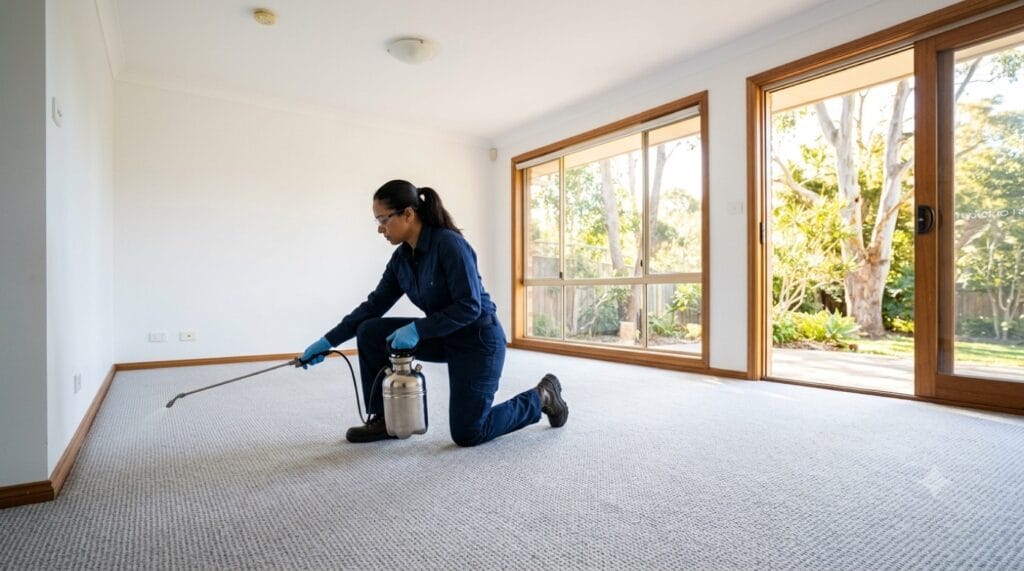
An end of lease flea treatment is a professional flea control service carried out when you move out of a rental, and most pet-friendly tenancy agreements in NSW require it if you have kept a cat or dog. It clears fleas, eggs and larvae from carpets and floors so the property passes its final inspection and your bond isn’t held over a pest issue.
If you’re a tenant vacating with pets — or a landlord preparing a property for the next tenancy — here’s what an end of lease pest control service covers, who usually pays, and how to get your home flea-free before handover.
What Is an End of Lease Flea Treatment?
An end of lease flea treatment is a targeted flea control service applied to a rental before the tenant moves out. A technician treats carpets, floorboards, skirting boards and shaded outdoor areas with a safe residual spray that keeps working for weeks, breaking the flea life cycle rather than just knocking down the adult fleas you can see. Many agents ask for a receipt from a licensed pest controller as proof the professional flea treatment was carried out.
Do You Need Flea Treatment at the End of Your Lease?
In most cases, yes — if you had a pet. It usually comes down to what your tenancy agreement says rather than a blanket law.
What most pet-friendly leases say
Most NSW leases that allow pets include a clause requiring the tenant to arrange a professional flea treatment at the end of the tenancy, to protect the next tenant and the property. Your written agreement sets the obligation, so check your lease and confirm with your agent. For your rights and responsibilities when ending a tenancy, see NSW Fair Trading.
Tenant vs landlord: who pays?
| Situation | Who usually pays |
|---|---|
| Tenant kept a cat or dog (pet clause in the lease) | Tenant |
| No pets kept during the tenancy | Generally not required |
| Fleas from a pre-existing or neighbouring issue | Negotiable — discuss with the agent |
| Landlord preparing a property between tenancies | Landlord |
If you’re unsure, ask your agent in writing before your final inspection so there are no surprises with your bond.
Why Fleas Are Still a Problem After Your Pet Leaves
You’ve moved the pet out, so the fleas should be gone — right? Not quite. Only around 5% of a flea population are the adults living on the animal; the other 95% are flea eggs, flea larvae and pupae hidden deep in carpet fibres, cracks and under furniture.
Those pupae can lie dormant for weeks and hatch when they sense warmth and vibration — like a new tenant walking in. That’s why fleas in the house can suddenly appear in an “empty” property, and why a single vacuum is never enough. Breaking the flea life cycle takes a residual treatment that stays active while the remaining eggs and larvae develop.
What a Professional End of Lease Flea Treatment Involves
Inspection and preparation
The technician checks where fleas are active — usually carpeted rooms, pet bedding areas and shaded outdoor spots. You’ll be asked to vacuum thoroughly and clear the floors first so the treatment can reach the base of the carpet.
Treatment and residual spray
A low-toxicity residual spray is applied to carpets, floor edges, skirting and affected outdoor areas. It kills adult fleas on contact and keeps working for several weeks to catch newly hatched fleas — the key to lasting results.
Warranty and follow-up
Reputable providers back the job with a warranty and, where needed, a follow-up visit. Keep your receipt — most agents want it as proof for the bond clean and final inspection.
How to Get Rid of Fleas in the House Before Your Final Inspection
A few steps beforehand make the flea treatment for the house far more effective:
- Vacuum all carpets, rugs and floor edges, then empty the vacuum outside straight away.
- Wash or dispose of any pet bedding.
- Mow and tidy the yard, especially shaded, sandy spots where fleas breed.
- Clear the floors so the technician can reach every surface.
- Book the treatment close to your handover date, after the carpets have been cleaned.
DIY foggers (“flea bombs”) rarely reach the eggs and larvae in the carpet base, which is why a professional flea treatment is the reliable way to know how to get rid of fleas in the house for good.
How Much Does End of Lease Flea Treatment Cost?
Cost depends on the size of the property and how much carpeted and outdoor area needs treating, but a standard end of lease flea treatment for a unit or small home is an affordable, one-off service — far cheaper than losing part of your bond. Ask for a fixed quote and confirm a warranty is included.
Book a Professional End of Lease Flea Treatment in Sydney
Wallace Pest Solutions provides fast, reliable end of lease flea treatments across Sydney, with receipts your agent will accept and no lock-in contracts. Whether you’re a tenant moving out or a landlord turning over a property, our residential pest control team will get it flea-free — and can pair it with a full pest inspection if you want the whole property checked. Get a free quote today.
Frequently Asked Questions
Is flea treatment compulsory at the end of a lease in NSW?
There is no blanket law, but most pet-friendly tenancy agreements include a clause requiring a professional flea treatment when you move out with a cat or dog. Check your lease and confirm with your agent.
Who pays for end of lease flea treatment — tenant or landlord?
If you kept a pet, the tenant almost always pays, as it’s tied to the pet clause in the lease. Between tenancies with no pet involved, the landlord covers it. If the source is unclear, discuss it with the agent before the final inspection.
Do I need a receipt for the agent?
Usually yes. Most agents ask for a receipt or invoice from a licensed pest controller as proof the treatment was done, so keep it with your bond-clean paperwork.
Can’t I just use a flea bomb?
Flea bombs seldom reach the eggs and larvae buried in the carpet, so fleas often return within weeks. A professional residual treatment breaks the flea life cycle and is far more likely to pass the final inspection.