

To get rid of silverfish, cut the humidity they depend on and remove their food. Ventilate and dehumidify bathrooms, laundries and wardrobes to below 50% humidity, fix leaks, declutter paper and cardboard, then treat hiding spots with diatomaceous earth or a residual crack-and-crevice insecticide. For a heavy or recurring infestation, a professional treatment clears the harbourage points you cannot reach.
Silverfish are one of the most common household pests in Sydney’s humid, coastal climate. They are harmless to people, but they quietly damage books, documents, clothing, wallpaper and stored food. This guide explains how to identify them, why they are in your home, and the exact steps that actually work in Australian conditions.
What do silverfish look like, and how do you know you have them?
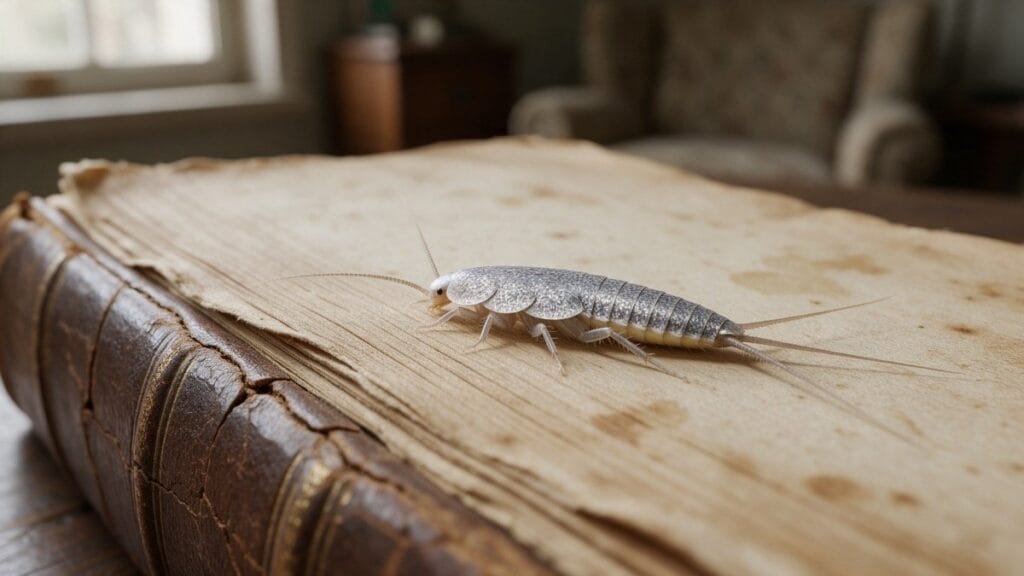
Silverfish are wingless, silvery-grey insects about 12 to 19 mm long, with a flat, tapered “carrot” shape, two long antennae at the front and three bristle-like tails at the back. They move with a quick, fish-like wriggle, which is where the name comes from. They are nocturnal, so you will usually see them when you switch on a light in a bathroom or spot one trapped in a sink or bath.
Common signs of a silverfish problem include:
- Yellow stains or small holes on paper, wallpaper, book spines and clothing.
- Irregular feeding marks and grazed surfaces on cardboard, photos and documents.
- Tiny black pepper-like droppings in drawers, cupboards and along skirting boards.
- Shed skins (silverfish moult throughout their lives) in dark, undisturbed corners.
- Live insects in the bath, sink, laundry, wardrobe or behind bookshelves at night.
Why are silverfish in your house?
Silverfish are drawn to two things: moisture and starch. They thrive when relative humidity climbs above about 75% and struggle to breed once it drops below 50%. That is why they cluster in the most humid, least-ventilated parts of the home, and why Sydney’s warm, damp spring and summer months are peak silverfish season.
Their diet is built around carbohydrates and starches, so almost anything paper- or fabric-based is on the menu: book bindings and glue, wallpaper paste, cardboard boxes, dry pantry goods, and natural fabrics such as cotton, linen and silk. They can survive for months without food, which is why an infestation can persist unnoticed for a long time.
Where silverfish hide, and what they damage
| Room / area | Why silverfish gather there | What they damage | Quick fix |
|---|---|---|---|
| Bathroom & laundry | High humidity, condensation, poor airflow | Toilet-roll cores, boxes, paint/wallpaper | Exhaust fan, dehumidifier, fix leaks |
| Wardrobe & drawers | Dark, still air, natural fabrics | Cotton, linen, silk, stored clothing | Air out, store clean, add moisture absorbers |
| Bookshelf & home office | Paper, glue and cardboard everywhere | Books, documents, photos, artwork | Declutter, box in airtight containers |
| Kitchen pantry | Flour, cereal and dry starches | Dry goods, cardboard packaging | Airtight jars, wipe spills, ventilate |
| Roof void & subfloor | Warm, humid, undisturbed harbourage | Stored paper, insulation backing | Ventilation, professional treatment |
How do you get rid of silverfish? (step by step)
The reliable way to clear silverfish is to make your home dry, food-free and sealed, then treat the spots they hide in. Work through these steps in order:
- Lower the humidity. Run exhaust fans, open windows on dry days, and use a dehumidifier in bathrooms, laundries and wardrobes. Aim for below 50% relative humidity, the single most effective control.
- Fix moisture sources. Repair dripping taps, leaking pipes and blocked gutters, and improve subfloor and roof ventilation.
- Remove their food. Declutter old newspapers, cardboard and paper, and store books, documents and dry pantry goods in sealed plastic containers.
- Seal the entry and hiding points. Caulk cracks in skirting boards, architraves, shelving and around pipes to close off harbourage.
- Treat with a residual product. Apply food-grade diatomaceous earth or boric acid into cracks, wall voids and the backs of cupboards; both dehydrate silverfish over a few days. Sticky traps help you monitor activity.
- Vacuum regularly. Remove eggs, droppings and shed skins from corners, skirting boards and bookshelves.
If silverfish keep coming back after this, the source is usually a hidden harbourage in the roof void, wall cavity or subfloor. A licensed technician can apply a targeted residual treatment to those areas and confirm the moisture problem feeding the infestation. Wallace Pest Solutions offers professional silverfish control across Sydney, and can pair it with a pest inspection to find the damp spots driving it.
How do you keep silverfish from coming back?
Prevention is about keeping conditions against them long-term:
- Keep humidity low year-round with ventilation and, where needed, a dehumidifier.
- Store important paper, books and seasonal clothing in airtight containers rather than cardboard boxes.
- Vacuum and dust dark, undisturbed areas such as wardrobes, shelves and under-sink cupboards regularly.
- Repair leaks and clear roof gutters before each wet season.
- Book a regular residential pest control service, which keeps silverfish and other moisture-loving pests in check as the seasons change.
Silverfish often share the same damp, fabric-and-paper environments as other quiet household pests, so the same dry-and-declutter habits also help against carpet beetles. As humidity rises in spring, it is also worth reviewing your wider spring pest control plan.
Frequently asked questions
Are silverfish harmful to humans?
No. Silverfish do not bite, sting or spread disease, and they are not dangerous to people or pets. The harm they cause is to belongings, they damage paper, books, wallpaper, clothing and stored food, and can trigger allergies in sensitive people through their shed skins and droppings.
What instantly kills silverfish?
There is no true “instant” fix, but the fastest-acting options are contact insecticide sprays for individual insects and desiccant dusts such as diatomaceous earth or boric acid for hiding spots. Dusts kill silverfish within a few days by drying them out, and, unlike a quick spray, they keep working on the ones you cannot see.
Where do silverfish come from?
Silverfish are usually already living in humid, undisturbed parts of the building, such as the roof void, subfloor or wall cavities, and move into living areas in search of moisture and food. They can also be brought in inside cardboard boxes, second-hand books and stored paper, then spread once conditions suit them.
Does one silverfish mean an infestation?
Not necessarily, but it is a warning sign. Silverfish are secretive and nocturnal, so seeing even one in daylight usually means there are more nearby in a hidden harbourage. If you are regularly finding them, or noticing damage to paper and fabric, it is worth treating the problem before it spreads.
How long does it take to get rid of silverfish?
With humidity control, decluttering and a residual treatment, most homes see numbers drop within one to two weeks and clear over about a month as remaining eggs hatch and die. Cases tied to a persistent moisture problem take longer until the underlying damp is fixed.
The bottom line
Silverfish survive on moisture and starch, so the homes that stay silverfish-free are the dry, ventilated, decluttered ones. Lower the humidity, seal and clean their hiding spots, and treat the harbourage points directly. If they keep returning, a professional silverfish treatment paired with a moisture check is the quickest way to end the cycle for good.
According to the Australian Museum, silverfish are among the most primitive living insects and are common household pests that feed on carbohydrates and starches such as paper, glue and textiles, thriving in humid environments, which is why moisture control is central to managing them.