
It starts with a sound. Scratching, scurrying, or a dull thud in the ceiling around dusk or midnight. Most Sydney homeowners hear it, assume it’s a possum, and do nothing. By the time they call someone, the colony is well-established — and the damage is already done.
Roof rats — also known as black rats (Rattus rattus) — are the most common rat species found in Sydney rooftops, ceiling voids, and wall cavities. They reproduce quickly: a single breeding pair can produce up to 40 offspring in a year under ideal conditions. Identifying the problem early and acting on it decisively is the difference between a minor nuisance and a full rat infestation requiring extensive treatment.
This guide covers exactly what to look for, what roof rats in Australia look like, why they enter Sydney homes, and the most effective ways to deal with them. If you’re already hearing noises in the ceiling and want a professional assessment, our rodent control team services homes across Sydney.
What Is a Roof Rat?
Roof Rat vs Norway Rat: Key Differences
Australia has two main introduced rat species: the roof rat (black rat, Rattus rattus) and the Norway rat (brown rat, Rattus norvegicus). They behave differently, nest in different parts of the home, and require slightly different approaches to treat. Correctly identifying which species you have is the first step.
Roof Rat (Black Rat) | Norway Rat (Brown Rat) | |
Size | 15–20 cm body | 20–25 cm body |
Weight | 150–200 g | 300–500 g |
Tail | Longer than body | Shorter than body |
Ears | Large, prominent | Small, close to head |
Colour | Black to dark brown | Brown/grey with pale belly |
Preferred location | Roof voids, ceiling, trees | Burrows, subfloor, drains |
Activity | Agile climber, rarely burrows | Ground-level, burrows in soil |
Droppings | Pointed ends, 10–13 mm | Blunt ends, 18–20 mm |
In Sydney homes, if the noise is coming from the ceiling or roof void, it is almost certainly a roof rat. Norway rats are more commonly found in subfloors, drains, and burrows beneath garden structures.
What Do Roof Rats Look Like?
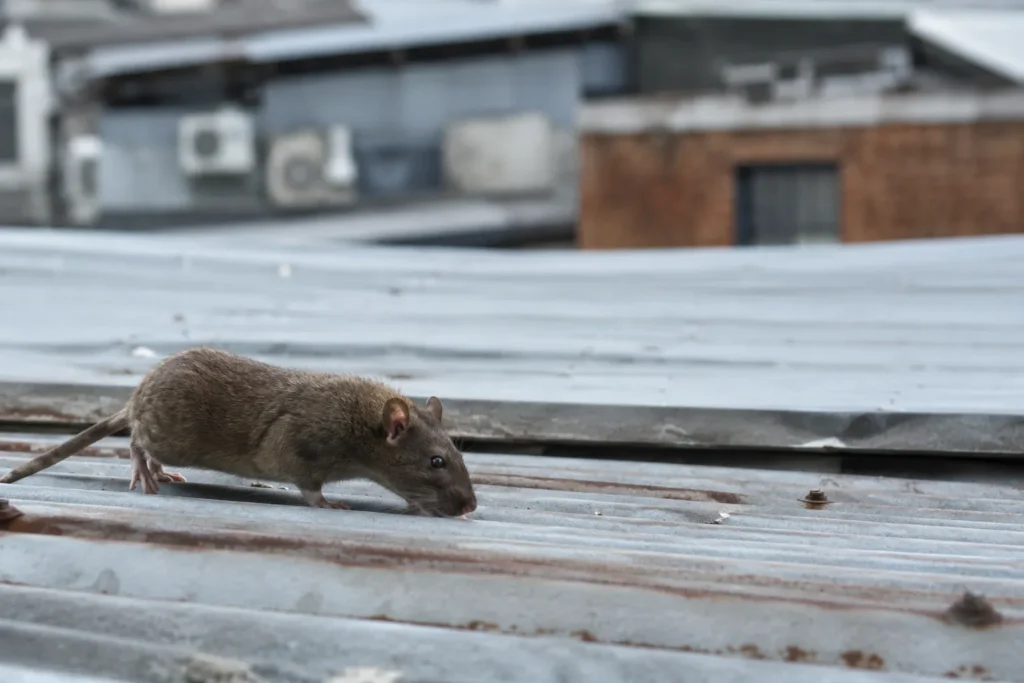
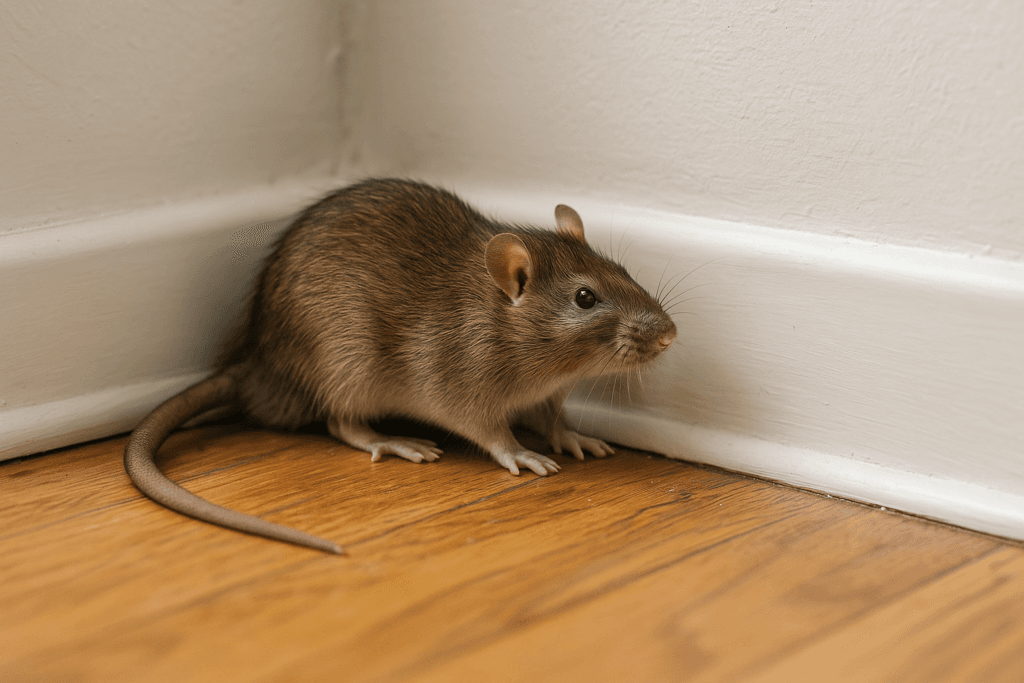
The roof rat is a slender, agile rodent with a body length of 15–20 cm and a tail that extends longer than its body — a reliable distinguishing feature. Its ears are large and almost hairless. Colouring ranges from black to dark grey-brown on the back, with a paler underside. Its pointed snout gives it a more delicate appearance than the bulkier Norway rat.
Why Roof Rats Are Common in Sydney
Sydney’s older housing stock — federation homes, terrace houses, and inter-war bungalows — provides abundant access points: gaps in the roofline, deteriorating timber fascia boards, and uncapped roof voids. Roof rats are exceptional climbers and can scale brick walls, run along power lines, and leap up to 60 cm horizontally. Sydney’s mature tree canopy in suburbs like Leichhardt, Newtown, Balmain, and the inner North Shore provides ideal travel corridors from trees directly into rooftops.
Signs You Have Roof Rats
This is the section most Sydney homeowners need. The following signs, taken together, give a reliable picture of whether you have roof rats — and how established the infestation is.
Noises: Scratching, Scurrying and Gnawing in the Ceiling
The most common and earliest sign. Roof rats are nocturnal — activity peaks between dusk and 2 am. Listen for:
- Rapid scurrying: roof rats moving between nesting and foraging areas
- Scratching: claws on timber joists or plasterboard
- Gnawing: a persistent, rhythmic chewing sound — on timber, wiring, or pipe insulation
- Thuds: rats dropping or jumping between surfaces in the roof void
Possum noise — the most common misdiagnosis — is heavier and less frequent. Possums move slowly and cause louder, more intermittent thumps. Rat noise is faster, lighter, and often sounds like it’s coming from multiple directions.
Rat Droppings: Identification and Location
Rat droppings are one of the clearest confirmation signs. Roof rat droppings are:
- 10–13 mm long with pointed ends (Norway rat droppings are larger, 18–20 mm, with blunt ends)
- Dark brown to black when fresh, grey and brittle when old
- Found in concentrated areas near food sources, along travel routes, and at nesting sites
Check: inside roof void insulation, in the back corners of kitchen cabinets, behind the oven and fridge, and in the garage or shed. A large number of droppings in a concentrated area indicates an established nest nearby.
Gnaw Marks and Structural Damage
Roof rats gnaw constantly — their incisor teeth grow continuously and must be worn down. In roof voids, look for gnaw marks on timber joists, roof battens, and pipe insulation. Gnawed electrical wiring is a serious fire risk and one of the most costly consequences of an untreated infestation. If you find any chewed cable sheathing, have an electrician inspect before addressing the rat problem.
Nesting Material in the Roof Void
Roof rats build nests from shredded soft materials: insulation batts, cardboard, paper, fabric, and plant matter. If you access the roof void and find concentrated piles of shredded material — particularly in corners, against the eaves, or packed into insulation — this is an active or recently active nest. A strong ammonia smell in the roof void accompanies established nesting.
Grease Marks and Runways
Roof rats travel the same routes repeatedly. Over time, the oils and dirt from their fur leave dark smear marks along the surfaces they run — along pipe runs, timber joists, and wall tops. These grease marks (also called runways or rat runs) are a reliable indicator of regular activity and help identify where to place traps and bait stations for maximum effectiveness.
Seeing a Rat — Dead or Alive
Roof rats are rarely seen during the day. A daytime sighting, particularly indoors, suggests a large population where competition for resources is pushing individuals out of the nesting area at unusual hours. A dead rat found inside — without an obvious cause — may indicate secondary poisoning from a neighbour’s bait station, or the natural attrition of a large colony.
Why Roof Rats Come Inside Sydney Homes
Food Sources That Attract Roof Rats
Roof rats are omnivores with a strong preference for fruit, seeds, and nuts — which is why they’re particularly common in Sydney suburbs with established fruit trees. Citrus, figs, avocados, and passionfruit are major attractants. Inside the home, unsecured compost bins, pet food left out overnight, open rubbish bins, and stored dry goods in non-sealed containers all provide reliable food sources.
How Roof Rats Get Into the Roof
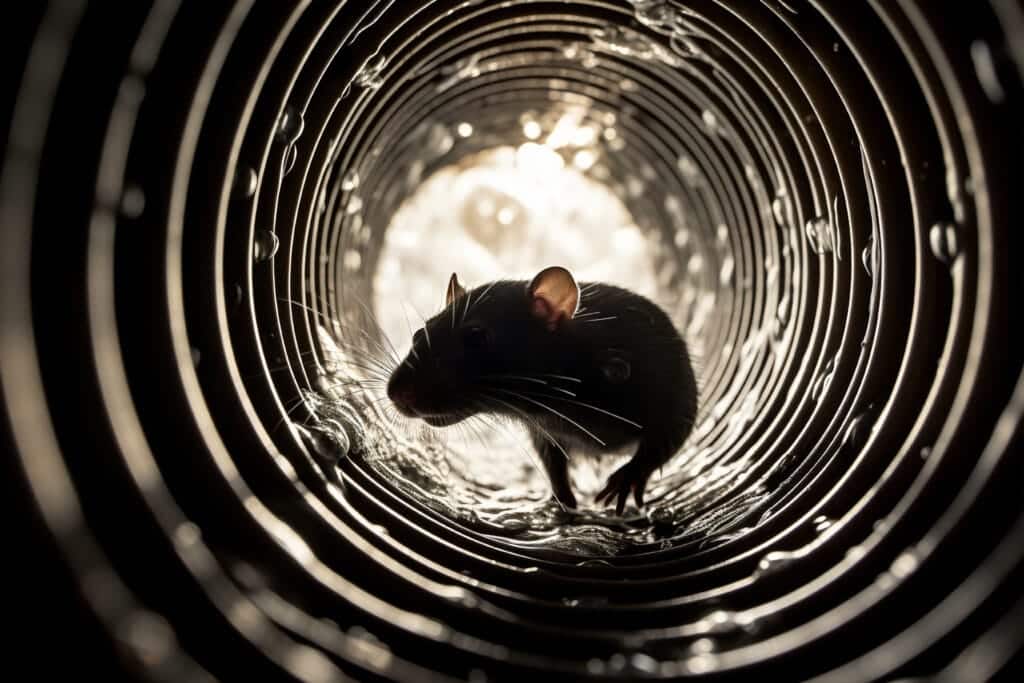
Roof rats need a gap of only 12 mm to squeeze through — roughly the diameter of a 50-cent coin. Common entry points include:
- Gaps in the roofline where fascia boards have deteriorated or separated
- Uncapped weep holes or vents without mesh
- Gaps around pipe penetrations through the roof or exterior walls
- Overhanging tree branches providing direct access to the roofline
- Open eaves on older timber-framed homes
- Gaps where roof meets brick — common in Sydney’s older double-brick homes
Seasonal Patterns: When Infestations Peak
Roof rat activity in Sydney peaks in autumn (March–May) as temperatures drop and food sources in gardens become scarce. Rats move indoors seeking warmth, shelter, and reliable food. A secondary peak occurs in late winter (July–August) as colonies grow. Summer infestations are less common but do occur, particularly in properties with established fruit trees or poorly secured food storage.
Are Roof Rats Dangerous?
Diseases Carried by Roof Rats
Roof rats are carriers of several diseases relevant to Australian households. Leptospirosis — spread through rat urine contaminating water or soil — is the primary health concern. Rats also carry salmonella (contaminating food preparation surfaces and stored food), rat-bite fever, and can host fleas that carry murine typhus. Direct contact with rat urine, droppings, or nesting material carries disease risk, particularly when cleaning roof voids without respiratory protection.
Structural and Electrical Damage
The financial cost of an untreated roof rat infestation frequently exceeds the cost of professional pest control many times over. Gnawed electrical wiring is the most serious risk — it is a documented cause of house fires. Beyond wiring, roof rats damage roof insulation (reducing thermal efficiency), gnaw water pipes causing leaks, destroy stored items, and contaminate insulation with urine and droppings, which typically requires full replacement.
Risk to Pets and Other Animals
Rodenticide secondary poisoning is a real risk for cats and dogs that may catch and eat a poisoned rat. Discuss bait placement and product selection with your pest controller if you have pets. Roof rats also introduce fleas and mites into the home — flea infestations following a rat infestation are not uncommon, and treating the rats without treating for fleas can leave a secondary problem behind.
How to Get Rid of Rats in the Roof
Snap Traps: Still the Most Reliable
For a contained roof rat problem, snap traps remain the most reliable and immediate solution. Use large-format snap traps (not mouse traps — they’re inadequate for rats) baited with peanut butter, chocolate, or nesting material such as a piece of cotton wool. Place traps perpendicular to the travel route, with the trigger end against the wall or joist. Check and reset every 24 hours. The advantage of snap traps is immediate confirmation — you know when a rat has been caught.
Rat Bait Stations: Effective but Requires Caution
Rat bait (rodenticide) is highly effective for larger infestations. Use tamper-resistant bait stations secured in the roof void along established runways. First-generation anticoagulants (diphacinone, chlorophacinone) require multiple feeds and carry lower secondary poisoning risk. Second-generation anticoagulants (brodifacoum, bromadiolone) are faster acting but carry higher secondary poisoning risk for pets and wildlife. Always use enclosed bait stations — open bait accessible to pets or children is not acceptable.
What NOT to Do
Avoid these mistakes — they make the problem worse or create new ones:
- Using poison without a dead rat removal plan. A rat that dies inside the roof void from rodenticide creates a serious odour problem for 2–4 weeks and attracts blowflies. If using bait in confined spaces, have a plan to locate and remove carcasses promptly.
- Relying only on glue traps. Glue traps are inhumane and largely ineffective for adult roof rats, which are strong enough to drag or escape from standard glue boards. They also capture non-target animals.
- Treating without sealing entry points. Removing the existing colony without sealing the access points that allowed them in guarantees re-infestation within weeks. Exclusion work must happen alongside or immediately after the treatment.
Ignoring the roof void completely. Surface-level baiting or trapping in living areas without addressing the nest site in the roof void will only reduce visible activity temporarily. The colony needs to be treated at source.
How to Prevent Roof Rats from Coming Back
Seal Every Entry Point
Exclusion is the only permanent solution. After eliminating the existing colony, systematically seal every gap of 12 mm or larger around the roofline. Use galvanised steel mesh (not plastic — rats chew through it) for ventilation points and open eaves. Apply metal flashing around pipe penetrations. Replace deteriorated timber fascia boards. This work is tedious but essential — skipping it is the single most common reason for re-infestation.
Remove Food and Harbourage Sources
Reduce what’s attracting rats in the first place:
- Harvest fruit trees promptly — don’t leave fallen fruit on the ground
- Store all dry goods in sealed hard containers (not cardboard or plastic bags)
- Use bins with tight-fitting lids; empty them regularly
- Remove pet food bowls overnight
- Keep compost in a sealed, rat-proof bin — not an open heap
Tree and Garden Management
Cut back any tree branches that overhang or touch the roof by at least one metre. Roof rats use branches as direct highways onto the roofline. Trim dense ivy or creeper growth from exterior walls — it provides both a climbing structure and sheltered harbourage. Stack firewood away from the house, not against the exterior wall.
Regular Roof Void Inspections
An annual pest inspection that includes the roof void gives you early warning of new activity before it becomes an established infestation. Early-stage evidence — a few droppings, fresh gnaw marks, initial nesting — is far easier and cheaper to deal with than a mature colony. In Sydney suburbs with heavy tree cover or older housing stock, a roof void check every 12 months is a sound investment.
Frequently Asked Questions
What do roof rats sound like at night?
Roof rats sound like rapid, light scratching or scurrying in the ceiling — faster and lighter than a possum. You may also hear gnawing (a repetitive chewing sound) and occasional thuds as they move between surfaces. Activity is most intense in the first few hours after dark and again around 2–4 am.
How do roof rats get into the roof?
Roof rats need only a 12 mm gap — the diameter of a 50-cent coin — to enter. The most common entry points are gaps in deteriorated fascia boards, open or unscreened eave vents, gaps around pipe penetrations, and overhanging tree branches providing direct access to the roofline. Older Sydney homes are particularly vulnerable due to ageing timber and open eave construction.
Are roof rats dangerous?
Yes, in two ways. To health: roof rats carry leptospirosis, salmonella, and other pathogens spread through contact with their urine, droppings, or nesting material. To the structure: gnawed electrical wiring is a documented fire risk, and damage to insulation and plumbing can be costly. An untreated infestation almost always costs more to remediate than professional pest control would have.
How long does it take to get rid of roof rats?
For a small, early-stage infestation treated with snap traps: 1–2 weeks. For a moderate infestation using a combination of trapping and baiting: 3–4 weeks. A large or well-established colony — particularly in an older home with multiple roof void access points — may require 2–3 professional treatments over 4–6 weeks, followed by exclusion work.
What is the difference between a roof rat and a Norway rat?
Roof rats are smaller, slender, and agile climbers with a tail longer than their body and large prominent ears. Norway rats are heavier and bulkier with a shorter tail and small ears. Roof rats nest in elevated locations — ceiling voids, rooftops, trees. Norway rats burrow in the ground and are found in subfloors, drains, and beneath garden structures. In Sydney, the noise-in-the-ceiling scenario is almost always a roof rat.