

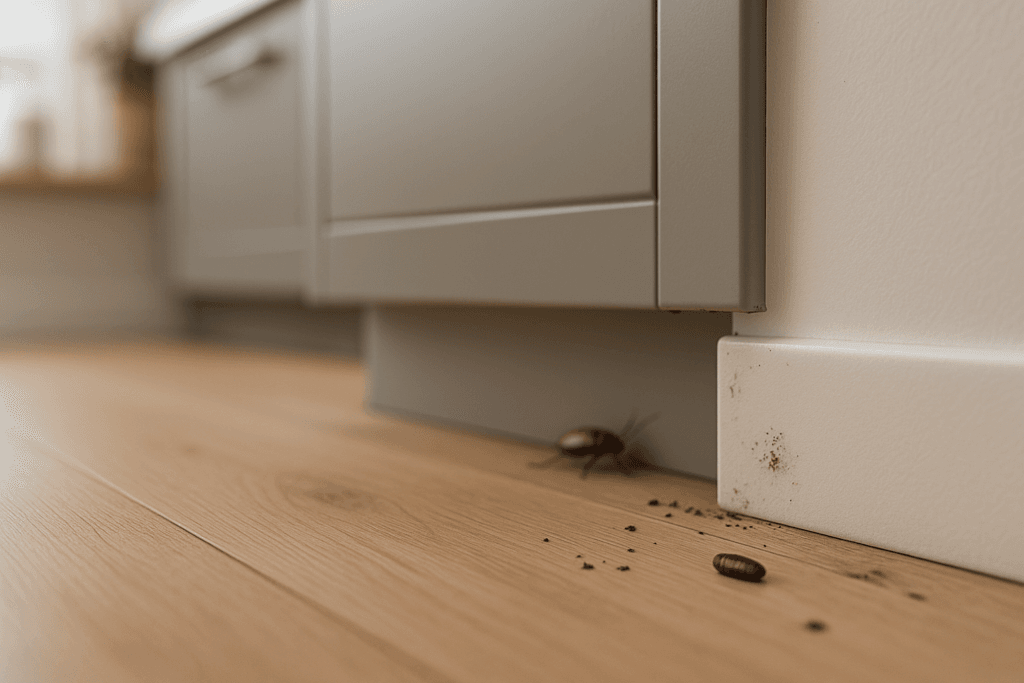
You spray one, it runs. You see another the next morning. Sound familiar? Cockroaches are one of the most frustrating pests to deal with — fast, resilient, and reproducing far quicker than most people realise. A single female German cockroach can produce hundreds of offspring in her lifetime, which is why most cockroach killers you buy off the shelf barely scratch the surface.
This guide covers everything you need to know: the most effective cockroach treatments, how to deal with the specific species found in Sydney homes, and when a cockroach infestation has gone beyond what DIY can handle. If you’re already dealing with a serious problem, our cockroach pest control team can help.
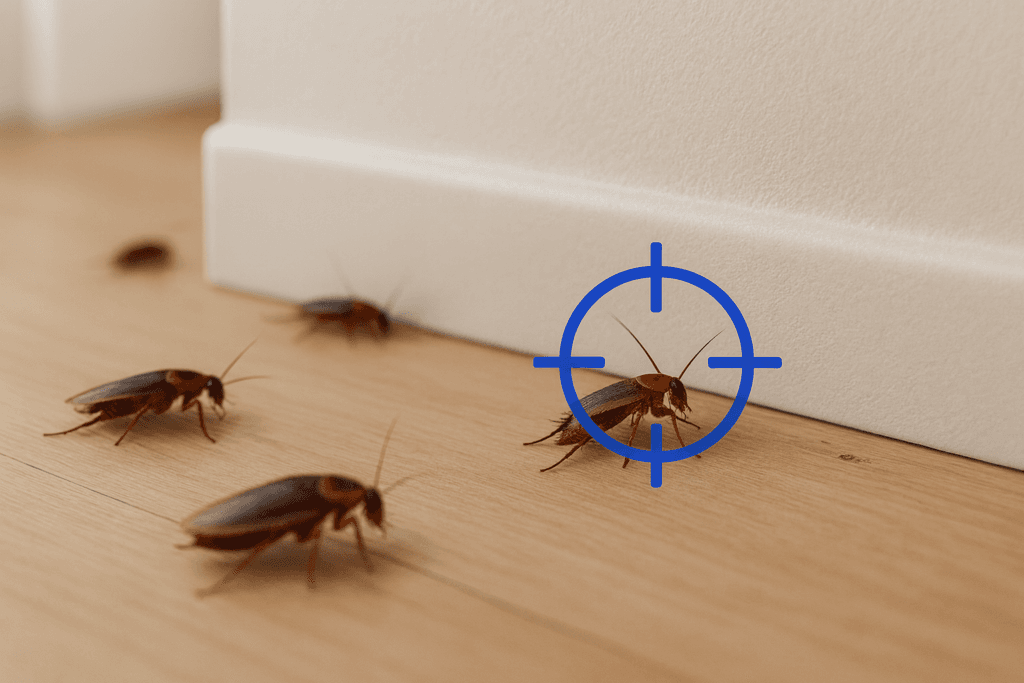
Why Cockroaches Are So Hard to Kill
Cockroach Biology: Built to Survive
Cockroaches have been around for roughly 300 million years — and they haven’t lasted that long by being fragile. They can survive without food for a month, without water for a week, and can hold their breath for up to 40 minutes. Some species can even survive brief exposure to insecticides by detoxifying them inside their bodies. Understanding this is key to choosing the right treatment.
How Fast Cockroaches Reproduce
This is the real problem. The German cockroach — the most common species in Sydney kitchens — produces an egg case (ootheca) containing up to 40 eggs roughly every six weeks. Each of those nymphs reaches reproductive maturity in about 60 days. One cockroach quickly becomes thousands. By the time you see cockroaches during the day, the colony is already large.
Why DIY Treatments Often Fail
Most retail sprays kill on contact — they deal with the cockroaches you can see, but have no effect on the egg cases hidden inside walls, under appliances, or behind cabinetry. Surface sprays also repel cockroaches rather than attract them, which means the colony simply moves further into the structure and becomes harder to reach.
Types of Cockroaches in Australia
Before treating, it helps to know what you’re dealing with. Different species require different approaches.
German Cockroach (Blattella germanica)
The dominant cockroach pest control challenge in Sydney. Small (12–15 mm), tan to light brown, with two dark stripes behind the head. Primarily lives indoors — kitchens, bathrooms, and anywhere warm and humid. The hardest species to eliminate and the one that most commonly causes cockroach infestations in commercial premises and homes alike.
American Cockroach (Periplaneta americana)
Large (35–40 mm), reddish-brown, with a yellowish figure-8 pattern behind the head. Often found in drains, subfloors, and sewers — they typically enter homes through gaps around pipes and drains. Less of a constant indoor pest than the German cockroach, but a sign of entry points that need sealing.
Australian Cockroach (Periplaneta australasiae)
Similar in size to the American cockroach but with distinctive yellow markings on the thorax. Prefers warmer, outdoor environments but moves inside in search of food and moisture. Common in Sydney gardens and greenhouses, and often found in subfloor areas of older homes.
Smokybrown Cockroach (Periplaneta fuliginosa)
Dark brown to mahogany, 30–35 mm, and a strong flier. Commonly found in roof voids, wall cavities, and around outdoor lighting. Tends to enter homes through gaps in the roofline or around air conditioning units. Less common in inner Sydney but increasingly prevalent in the Hills District and North Shore.
How to Kill Cockroaches: Most Effective Methods
Cockroach Baits: The Most Reliable DIY Option
Cockroach bait is consistently the most effective DIY method — and the approach professional pest controllers use as the foundation of any treatment. Gel baits attract cockroaches with a food-based lure mixed with a slow-acting insecticide. The cockroach feeds, returns to the harbourage, and dies — where other cockroaches then consume it, spreading the active ingredient through the colony (a process called secondary kill).
Apply cockroach bait in small pea-sized dots in dark, warm areas: inside cabinet hinges, behind the dishwasher, under the fridge motor, and inside the base of the oven. Replace every 3 months or when the bait dries out. Don’t use sprays in the same areas — insecticide residue repels cockroaches away from the bait.
Cockroach Sprays and Insecticides
Surface sprays (bifenthrin, deltamethrin, permethrin-based) create a residual barrier on surfaces cockroaches walk across. Applied to skirting boards, under appliances, and around entry points, they provide several weeks of protection. They work best as a complement to baiting — not as a standalone treatment. Never apply spray directly over bait stations.
Boric Acid and Diatomaceous Earth
Both are low-toxicity options useful in areas where chemical treatments aren’t preferred. Boric acid works as a stomach poison when ingested and sticks to the cockroach’s body as it walks through treated areas. Diatomaceous earth damages the waxy cuticle of the exoskeleton, causing dehydration. Apply as a fine dusting in wall cavities, subfloor areas, and roof voids. Effectiveness reduces significantly when the product gets wet — not ideal for under-sink areas.
Cockroach Traps
Sticky traps don’t eliminate a colony, but they’re a useful monitoring tool. Place them along walls and under appliances to gauge activity levels and identify the most active harbourage areas before treating. Check every few days — a trap covered in cockroaches within 24 hours confirms a significant infestation nearby.
What NOT to Do (Common Mistakes)
Avoid these mistakes — they make infestations worse:
- Spraying only what you can see. Contact sprays kill visible cockroaches but push the colony deeper into the structure.
- Using repellent sprays near bait. Insecticide residue prevents cockroaches from reaching bait stations, killing the secondary kill effect.
- Ignoring egg cases. Ootheca (egg cases) are resistant to most sprays. If you find one, remove it physically and dispose of it in a sealed bag.
- Treating only the kitchen. Cockroaches in walls move throughout the property. Treat all harbourage areas, not just where you see activity.
- Stopping treatment after adults disappear. Egg cases can hatch weeks later. Continue treatment for at least 4–6 weeks after the last sighting.
How to Get Rid of Cockroaches Naturally
Essential Oils and Natural Repellents
Peppermint oil, cedarwood oil, and eucalyptus oil have repellent properties — cockroaches dislike the scent. Dilute in water and spray around entry points and behind appliances. These are not effective for an active infestation but can discourage new cockroaches from entering a clean home.
Remove Food and Moisture Sources
To get rid of cockroaches naturally, start by eliminating what sustains them. Store all food in sealed containers. Empty bins daily. Fix any dripping taps — cockroaches can survive without food for a month, but not without water for more than a week. Clean grease from the oven, range hood, and behind appliances regularly, as grease is one of their primary food sources.
Seal Entry Points
Cockroaches enter through gaps around pipes, drain openings, cracks in the wall, and gaps under doors. Use silicone sealant around all pipe penetrations. Install door sweeps on external doors. Check weep holes in brickwork — mesh weep hole covers allow ventilation while blocking entry.
How to Kill German Cockroaches Specifically
Why German Cockroaches Are the Hardest to Eliminate
German cockroach treatment is a different challenge from other species. They reproduce faster, develop insecticide resistance quickly, and almost never leave the building — their entire life cycle happens indoors. They also produce aggregation pheromones that draw more cockroaches into already-infested areas, compounding the problem rapidly.
Gel Bait Strategy for German Cockroaches
For German cockroaches, gel bait is not optional — it’s the primary treatment. Apply small dots (2–3 mm) of gel bait every 15–20 cm in active areas: inside cabinet hinges, on the inside walls of the kickboard beneath kitchen cabinets, behind the dishwasher, and inside the electrical panel area of the oven. Rotate bait products every 2–3 months to prevent resistance. Maxforce Fusion, Syngenta Advion, and Bayer Tempo Gel are the professional-grade products used across Sydney.
When to Call a Professional for German Cockroaches
If you’ve been baiting for 4–6 weeks without a significant reduction in activity, or if you’re seeing cockroaches during the day — which signals severe overcrowding — it’s time to call in a residential pest control professional. German cockroach infestations in commercial kitchens, strata buildings, and apartment blocks almost always require professional treatment due to the interconnected nature of the infestation.
Signs of a Cockroach Infestation
Droppings, Smear Marks and Egg Cases
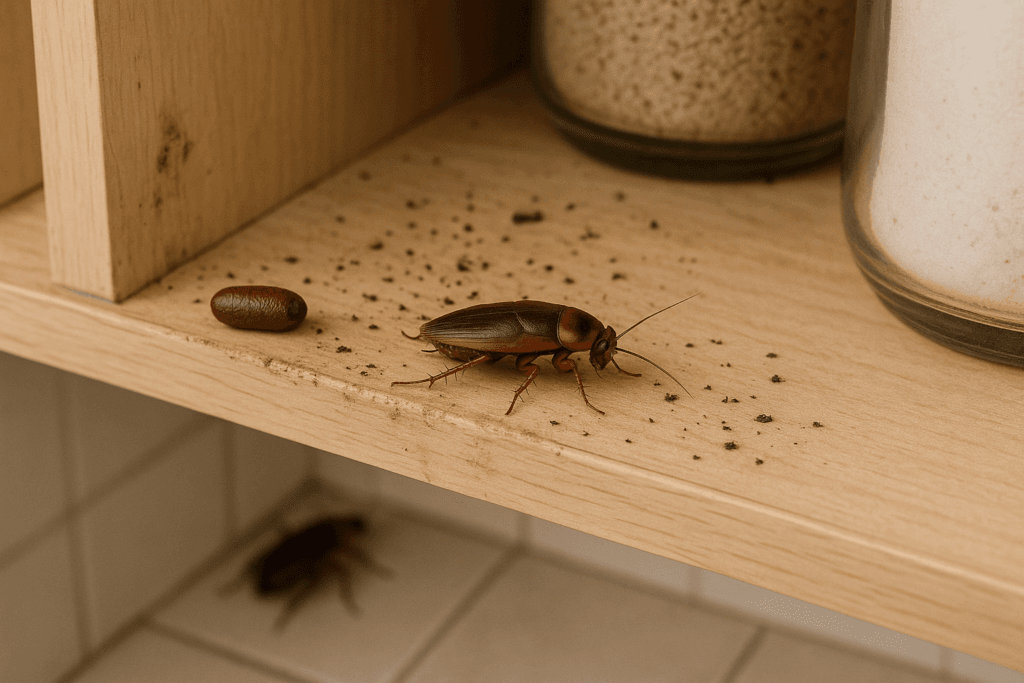
Signs of a cockroach infestation include small dark droppings that look like black pepper or coffee grounds, particularly in corners of cabinets, along the top of the kickboard, and behind appliances. Smear marks appear as dark, irregular streaks along walls and surfaces where cockroaches travel. Egg cases (oothecae) are small, brown, ribbed capsules — each contains up to 40 eggs.
Musty Odour
A large cockroach colony produces a distinctive, oily, musty smell from aggregation pheromones. If you notice an unexplained odour in the kitchen, bathroom, or a storage area — particularly in a property you’ve recently moved into — it’s worth investigating behind the appliances and inside the cabinetry.
Seeing Cockroaches During the Day
Cockroaches are nocturnal. Seeing them during the day means the colony is large enough that nocturnal resources — food, water, harbourage space — are insufficient for the population. Daytime sightings are a strong indicator of a significant infestation that has likely been established for some time.
How to Prevent Cockroaches Coming Back
Kitchen and Food Storage Habits
The single most effective prevention measure is denying cockroaches food. This means sealed containers for all dry goods, no food left out overnight (including pet food bowls), grease-free range hoods and ovens, and bins with tight-fitting lids emptied daily. Don’t overlook recycling bins — rinsing cans and bottles before binning them removes a significant food source.
Fixing Moisture and Plumbing Issues
Fix dripping taps under the sink, ensure the dishwasher drain isn’t leaking, and check for condensation around pipes in the laundry. Moisture is often what keeps a cockroach colony established even when food sources are controlled. Subfloor ventilation in older Sydney homes is also worth checking — damp, poorly ventilated subfloors are prime harbourage for American cockroaches.
Regular Professional Pest Treatments
An annual pest inspection and general treatment provides a residual barrier that keeps cockroach numbers in check before they become an infestation. For commercial pest control — restaurants, cafes, and food businesses — quarterly treatments are standard and required for compliance with NSW Food Authority guidelines.
Frequently Asked Questions
What kills cockroaches instantly?
Direct contact sprays (bifenthrin, deltamethrin) kill cockroaches on contact, as does undiluted boric acid applied directly. Physically, steam cleaning at high temperatures (above 60°C) kills cockroaches and egg cases on surfaces. However, ‘instant’ killing is largely irrelevant — what matters is eliminating the colony, not individual cockroaches.
How do I get rid of cockroaches permanently?
Permanent elimination requires addressing the colony, not just the visible insects. Use gel bait in all harbourage areas, seal entry points, eliminate food and moisture sources, and continue treatment for at least 6 weeks after the last sighting. For German cockroaches particularly, professional treatment is often required for complete elimination.
Why do I have cockroaches if my house is clean?
Cockroaches don’t only infest dirty homes. They need moisture and warmth more than food. A dripping tap, a warm roof void, or a gap behind the dishwasher is enough. In apartments and terrace houses, they also travel between units through shared wall cavities and plumbing — meaning your neighbour’s infestation can easily become yours.
Does bleach kill cockroaches?
Bleach kills cockroaches on direct contact but is not effective as a treatment. It doesn’t provide any residual protection, doesn’t reach harbourage areas, and will repel cockroaches rather than attract them to treated surfaces. Use bait as your primary treatment.
How long does it take to get rid of a cockroach infestation?
A minor infestation treated with gel bait can be under control within 1–2 weeks. A moderate infestation typically takes 4–6 weeks of consistent treatment. German cockroach infestations in commercial kitchens or large residential buildings may take 2–3 professional treatments over 3 months to fully eliminate.