

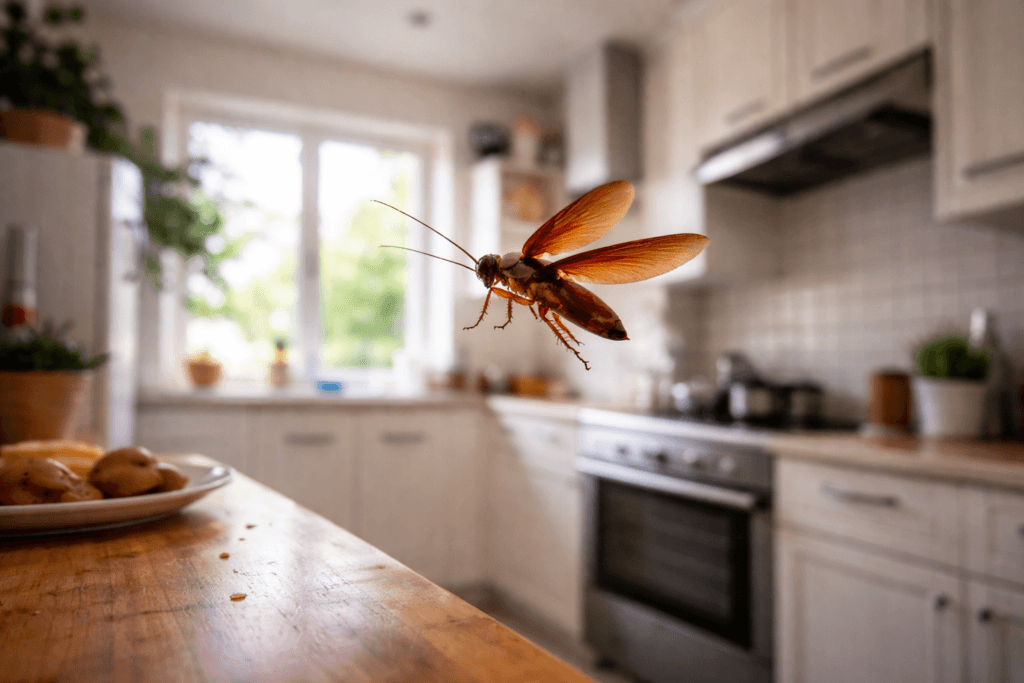
Seeing a flying cockroach in your home is one of the most unsettling pest experiences. Unlike regular cockroaches, these insects can move quickly through the air, making them harder to control and more alarming.
In Australia, flying cockroaches are especially common during warmer months, when pest activity increases. This is why understanding why is pest control important? is key to preventing infestations. If you’re dealing with recurring issues, professional pest control is the safest and most effective solution.

What Is a Flying Cockroach?
A flying cockroach is not a separate species, but rather a cockroach with fully developed wings capable of gliding or flying short distances.
Many people ask what is a flying cockroach, and the answer is simple:
- It’s a cockroach species that can use its wings
- Often larger than typical household roaches
- More active in warm, humid conditions
Why Are Flying Cockroaches More Active in Summer?
Flying cockroaches are closely linked to summer bugs, as heat and humidity increase their activity.
During summer:
- Breeding cycles accelerate
- Food sources are abundant
- Warm air makes flying easier
This explains why sightings increase dramatically at night.
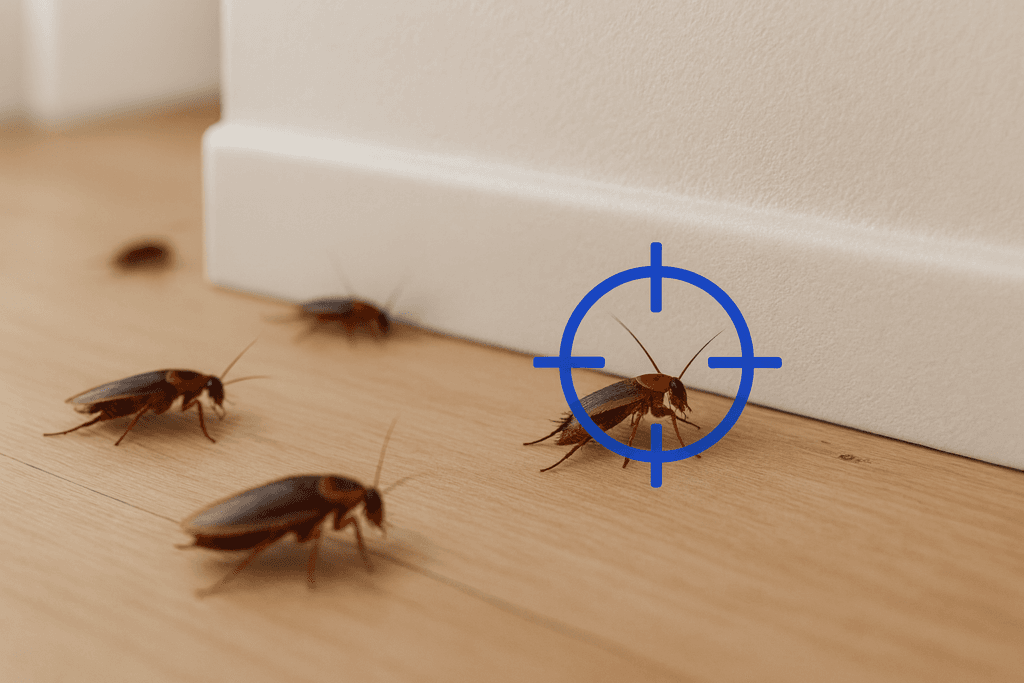
Flying Cockroaches in Australia
Australian Flying Cockroach Species
The most common flying cockroach Australia species include:
- American cockroach
- Australian cockroach
- Smokybrown cockroach
These are often referred to as australian flying cockroach types due to their presence in urban areas.
Giant and Big Flying Cockroaches Explained
A giant flying cockroach or big flying cockroach is typically:
- Larger in size
- More visible
- Capable of longer glides
These are usually adult cockroaches with fully developed wings.
Small Flying Cockroaches vs Larger Species
A small flying cockroach may:
- Fly less efficiently
- Be younger or a different species
- Still indicate an infestation nearby
Which Cockroaches Can Fly?
American Cockroach
Large, reddish-brown and one of the most common flying species.
Australian Cockroach
Similar to the American species but slightly smaller.
Smokybrown Cockroach
Dark brown and strong fliers, often attracted to lights.
Asian Flying Cockroach
More active flyers, commonly found outdoors.
Why Do Cockroaches Fly?
Cockroaches don’t always fly — they usually glide when needed.
Reasons include:
- Escaping predators
- Searching for food
- Moving toward light sources
- Finding mate
What Attracts Flying Cockroaches to Your Home?
Flying cockroaches are drawn to:
- Outdoor lighting
- Food waste
- Moisture
- Open windows and doors
Can Flying Cockroaches Hurt You?
Many people wonder, can flying cockroaches hurt you?
They don’t bite or attack, but they can:
- Spread bacteria
- Trigger allergies
- Contaminate surfaces
Difference Between Flying Cockroaches and Regular Cockroaches
The difference between cockroach and flying cockroach is mainly:
- Wing development
- Mobility
- Behaviour
Flying species tend to be more active and harder to control.
Where Do Flying Cockroaches Hide?
They hide in:
- Drains and pipes
- Roof voids
- Kitchens and bathrooms
- Outdoor vegetation
During the day, they stay hidden and emerge at night.
How to Get Rid of Flying Cockroaches in Your Home
If you’re searching how to get rid of flying cockroach, focus on:
- Sealing entry points
- Reducing moisture
- Keeping food sealed
- Turning off unnecessary lights
However, DIY methods rarely solve the root problem.
When to Call a Professional Cockroach Control Service
If you notice repeated sightings, it’s time for expert help.
Professional cockroach control:
- Targets hidden nests
- Eliminates breeding areas
- Prevents future infestations
Flying cockroaches are more than just a nuisance — they’re a sign of underlying pest activity. Understanding their behaviour is the first step, but long-term control requires the right strategy.
If flying cockroaches are appearing in your home, professional pest control is the most reliable way to eliminate them and keep your property protected.